
Europavia España Secures 375,000 EUR Helicopter Avionics Maintenance Contract for Spanish Air and Space Force
09 Oct 2026
Standfirst The Spanish Air and Space Force has concluded a specialized maintenance agreement for its helicopter avionics fleet. This single-bid procurement highlights the niche nature of military electronic system repairs. A notable data discrepancy exists between the reported tender value and the final awarded contract sum. Introduction Maintaining the operational readiness of military aviation assets requires highly specialized technical expertise. The Spanish Air and Space Force relies on continuous maintenance cycles to ensure the safety and mission capability of its helicopter fleet. This specific procurement addresses the critical need for repairing and reviewing avionics instruments across multiple weapon systems. Executed through an open procedure, this tender reflects the standard regulatory framework governing European defence acquisitions. Such contract awards published on the official Tenders Portal provide vital market intelligence for defence contractors. They illustrate how public procurement balances operational urgency with competitive transparency. The strategic allocation of capital toward sustainment rather than new acquisitions indicates a mature lifecycle management approach. Supply chain impact is concentrated on firms possessing the necessary security clearances and technical certifications. This ensures that critical defence infrastructure remains supported by validated domestic or allied industrial partners. Why This Contract Matters Operational readiness is the primary driver for this acquisition. Avionics systems form the nervous system of modern military helicopters. Failure in these electronic instruments can ground entire fleets, making reliable maintenance contracts a matter of national security rather than mere administrative routine. The receipt of only one bid validates the highly specialized nature of the domestic defence sector. It suggests that the barriers to entry for military avionics repair are substantial. These barriers include stringent technical requirements, security protocols and the need for established track records with armed forces. This contract drives continuous improvement through its specific award criteria. By weighting factors such as warranty periods and subcontracting coefficients, the buyer mitigates supply chain risk. This structured approach ensures that the selected supplier is incentivized to maintain high quality standards throughout the contract duration. Contract Timeline The winner selection occurred on 07/09/2026. The formal conclusion of the contract took place shortly after on 07/10/2026. The notice was subsequently published in the Official Journal of the European Union on 09/10/2026. An anomaly exists in the reported review deadline of 16/07/2026. This date precedes the award decision, indicating a potential data entry error in the original notice. It may also reference an earlier procedural phase that was not updated in the final contract award notice. Contract Overview This agreement covers the review and repair of instruments and avionics equipment. The total contract value is set at 375,000.00 EUR. The arrangement is a specific contract rather than a framework agreement. Quantities are not initially defined in the notice. Supplier responsibilities are dictated entirely by the operational needs of the Air and Space Force. The contractor must process elements as they arise, requiring flexible capacity and rapid response capabilities. Key Contract Details Contract Title20265304 Revisión y reparación de instrumentos y equipos de aviónica de helicópteros Contracting AuthorityDirección de Adquisiciones del Mando de Apoyo Logístico del Ejército del Aire y del Espacio Contract Value375,000.00 EUR Procedure TypeOpen Number of Bids Received1 Winner(s)EUROPAVIA ESPAÑA S.A Contract Conclusion Date07/10/2026 Main CPV Code50660000 Repair and maintenance services of military electronic systems Project Scope The deliverables encompass the maintenance of instruments and avionics equipment. This applies specifically to the Weapons Systems H.21, H.24, H.25, H.27 and H.29 helicopter platforms operated by the Spanish military. Technical requirements demand strict adherence to military aviation standards. The geographic scope of performance is centered in Madrid, Spain. This aligns with the primary logistical hubs of the contracting authority. About the Contracting Authority The buyer is the Dirección de Adquisiciones del Mando de Apoyo Logístico del Ejército del Aire y del Espacio. This central government authority manages procurement activities for the Logistics Support Command. Its primary responsibility is ensuring the Spanish Air and Space Force possesses the necessary equipment and services to fulfill its defence mandates. It operates under strict national and European public procurement regulations. About the Organisations Involved Dirección de Adquisiciones del Mando de Apoyo Logístico del Ejército del Aire y del Espacio Acting as the primary buyer and review information provider, this entity oversees defence acquisitions. It ensures all procurement activities comply with applicable legal frameworks. EUROPAVIA ESPAÑA S.A This large economic operator serves as the sole winner of the contract. The company specializes in aviation services and possesses the technical capacity to handle complex military avionics maintenance tasks. Tribunal Administrativo Central de Recursos Contractuales This body functions as the review organisation. It provides oversight and handles any potential disputes or appeals related to the procurement process, ensuring legal compliance and fairness. Procurement Analysis The open procedure yielded exactly one tender. This lack of competition is a critical analytical point. It indicates a market with limited qualified suppliers or a highly specific set of requirements that only one entity could meet. The award criteria heavily favored price at 65 points. The remaining 35 points were allocated to quality metrics. These included a 5-point weight for the warranty period. Additional quality points addressed hourly labor prices, material price coefficients and subcontracted work coefficients for non-listed components. This structure indicates a mature procurement baseline. The buyer anticipates variable repair needs and seeks to control costs for undefined future work. A significant data quality issue must be flagged. The statistical information lists the value of the lowest and highest admissible tenders as 643,480.26 EUR. However, the awarded contract value is 375,000.00 EUR. This discrepancy suggests either a reporting error in the TED form or a complex pricing adjustment not fully detailed in the summary fields. Additional Procurement Facts The procurement project is not financed with European Union Funds. The contract is covered by the Government Procurement Agreement (GPA). This allows suppliers from GPA signatory countries to participate. The legal basis for this procedure is Directive 2014/24/EU. This directive governs standard public procurement regimes across the European Economic Area. Market and Industry Perspective The military maintenance, repair and overhaul sector operates under unique constraints. Suppliers must maintain specialized facilities and certified personnel. This creates high barriers to entry and naturally limits the number of active bidders in any given tender process. Future RFPs and RFQs in this domain will likely continue to emphasize lifecycle cost management. Suppliers must align their proposals with detailed BOQs and respond promptly to GPNs. The market will reward firms that can demonstrate both technical excellence and financial predictability in their bids. Economic Significance This contract injects direct financial value into the Spanish aerospace sector. It supports specialized engineering jobs and sustains advanced technical capabilities within the domestic industrial base. The multiplier effect extends beyond the primary contractor. Subcontractors providing niche components or specialized logistics will also benefit. This sustains a broader ecosystem of defence suppliers centered around the Madrid region. Future Procurement Opportunities Suppliers interested in this sector should actively monitor the official Tenders Portal. Tracking Active Tenders and Live Notices for Tenders is essential for capturing early market intelligence. Defence logistics commands regularly issue new requirements for fleet sustainment. Companies should prepare to respond to upcoming live tender opportunities by maintaining updated certifications and clear capacity statements. Opportunities for Suppliers The contract structure explicitly accounts for subcontracted work. This creates immediate opportunities for niche hardware providers and specialized software developers. Firms offering advanced diagnostic tools or secure logistics solutions can position themselves as valuable partners to the primary contractor. Building these relationships before a tender is announced is a highly effective strategy. What Businesses Should Watch Industry participants must track the enforcement of quality criteria in future awards. Shifts in the weighting between price and technical merit signal changing buyer priorities. Observing government defence budget allocations is also critical. Increases in sustainment funding will directly correlate with a higher volume of public procurement notices in the aviation maintenance sector. SpainTenders.com Procurement Intelligence Strategic trend analysis reveals a clear preference for predictable cost structures in military maintenance. Buyers are increasingly using coefficient-based pricing to manage the financial risk of undefined repair volumes. The importance of this award lies in its demonstration of market consolidation. When only one bid is received, it highlights the critical need for buyers to periodically review and potentially broaden their technical requirements to encourage wider participation. The future evolution of this market will likely incorporate stricter sustainability mandates and data sovereignty requirements. Defence contractors will need to prove that their supply chains are both environmentally compliant and secure from foreign interference. Supplier Takeaways Specialized military maintenance markets often yield single-bid outcomes due to high technical barriers. Coefficient-based pricing is a critical mechanism for managing undefined repair volumes in defence contracts. Subcontracting opportunities remain viable even when the primary contract is awarded to a large entity. Suppliers must meticulously verify data consistency in their own tender submissions to avoid reporting anomalies. Key Takeaways The contract value is 375,000.00 EUR for helicopter avionics maintenance. Only one tender was received, indicating a highly specialized supplier market. A data discrepancy exists between the reported tender value of 643,480.26 EUR and the awarded sum. The award criteria heavily weighted price at 65 points, with the remainder focused on quality and warranty metrics. The procurement is covered by the Government Procurement Agreement, allowing international participation. Conclusion This contract ensures the continued operational readiness of the Spanish helicopter fleet through specialized maintenance. It highlights the unique dynamics of defence procurement where technical capability often outweighs broad market competition. Source: Tenders Electronic Daily (TED), Contract Award Notice 699472-2026, Official Journal of the European Union, published on 09/10/2026.
View Details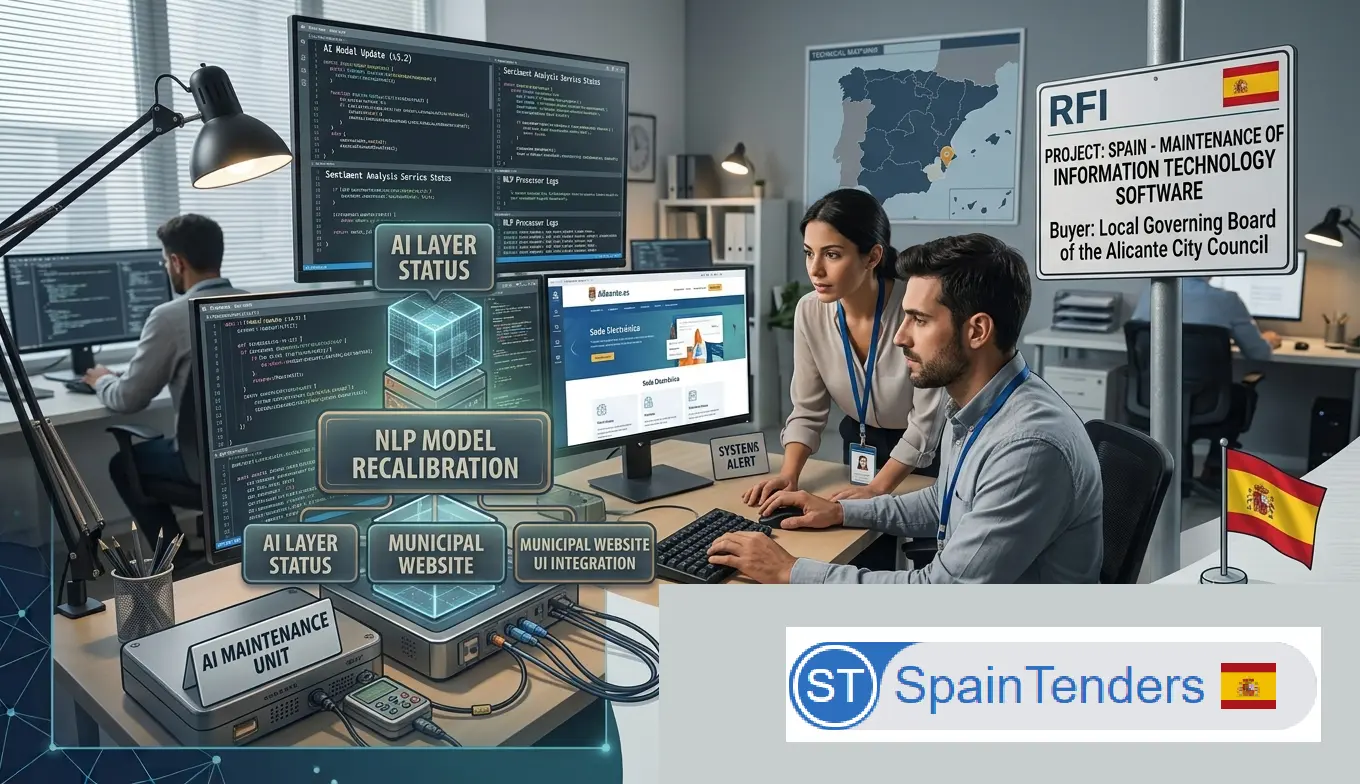
Lynx View Secures 95,202 Euro AI Maintenance Contract for Alicante Municipality
08 Oct 2026
Standfirst LYNX VIEW, S. L. has been awarded a 95,202 euro contract by the Junta de Gobierno Local del Ayuntamiento de Alicante to maintain the artificial intelligence layer integrated into the municipality's official website and electronic headquarters. The procurement was executed via a negotiated procedure without prior call for competition, justified by the exclusive intellectual property rights required to service the proprietary AI system. This tender result highlights the growing reliance of Spanish local governments on specialized, proprietary AI technologies to enhance digital citizen services. Introduction The digital transformation of municipal administration increasingly involves the deployment of advanced technologies, such as artificial intelligence, to improve citizen engagement and streamline public services. In Spain, the Ayuntamiento de Alicante has initiated a targeted procurement strategy to ensure the continuous operation and maintenance of its AI-driven digital infrastructure. This recent contract award secures the specialized technical support required to maintain the AI layer on the municipal web portal and electronic headquarters (sede electrónica). By executing this procurement through a negotiated procedure without prior publication, the contracting authority ensured compliance with public procurement regulations while addressing the unique technical realities of proprietary software maintenance. The selection criteria prioritized financial efficiency, reflecting the specialized and exclusive nature of the required services. This approach guarantees that the municipality's digital platforms remain operational, secure, and capable of delivering modern e-government services to its residents. Why This Contract Matters This procurement is vital for ensuring that the digital front door of the Alicante municipality remains functional and responsive to citizen needs. The maintenance of an AI layer on a public portal requires highly specialized knowledge of the underlying proprietary architecture, making continuous support essential to prevent service disruptions. For the domestic IT sector, this contract award validates the capability of specialized local firms to deliver niche, high-value digital services to public administrations. It also demonstrates the practical challenges and realities of public sector digitalization, where the initial adoption of proprietary AI solutions can lead to technical exclusivity in subsequent maintenance phases. Understanding how local authorities manage these intellectual property dependencies is crucial for suppliers and policymakers navigating the European public technology market. Contract Timeline The procurement process concluded with the formal selection of the winning bidder on September 1, 2026. Following standard administrative procedures, the formal contract was signed on September 25, 2026. The official contract awards notice was published in the Official Journal of the European Union on October 8, 2026. This timeline reflects a streamlined acquisition process typical for direct awards based on technical exclusivity and intellectual property rights. Contract Overview The agreement covers the ongoing maintenance of the information technology software specifically related to the AI layer of the Alicante municipal website and electronic headquarters. The total awarded value is 95,202.00 euros. The supplier is responsible for ensuring the system's stability, applying necessary updates, and resolving technical incidents to maintain the digital services provided to the public. Key Contract Details Contract Title Mantenimiento de la capa de inteligencia artificial sobre la página web municipal y la sede electrónica Contracting Authority Junta de Gobierno Local del Ayuntamiento de Alicante Contract Value 95,202.00 EUR Procedure Type Negotiated without prior call for competition Number of Bids Received 1 Winner LYNX VIEW, S. L. Contract Conclusion Date September 25, 2026 Main CPV Code 72267100 (Maintenance of information technology software) Project Scope The core scope involves the specialized maintenance of the artificial intelligence software layer integrated into the municipality's primary digital channels. This includes monitoring system performance, applying proprietary patches, managing the AI models' interaction with the municipal web infrastructure, and providing technical support to ensure seamless citizen access to the electronic headquarters. The contractor must navigate the specific technical environment established during the initial deployment of the AI system. About the Contracting Authority The Junta de Gobierno Local del Ayuntamiento de Alicante is the primary buyer for this procurement. It is the local governing body responsible for managing public services, urban administration, and digital transformation initiatives within the city of Alicante, Spain. About the Organisations Involved Junta de Gobierno Local del Ayuntamiento de Alicante is the contracting authority and buyer. It manages municipal public services and drives the procurement of essential IT infrastructure to modernize local administration. LYNX VIEW, S. L. is the successful bidder and a micro, small, or medium enterprise. Based in Alicante, the company specializes in advanced IT solutions and holds the exclusive intellectual property rights or technical authorization required to maintain the municipality's specific AI architecture. Procurement Analysis The negotiated procedure without prior call for competition attracted a single bid, which is the expected outcome when a contract is justified by exclusive intellectual property rights. The award criteria relied entirely on price, carrying a 100 percent weight. This binary evaluation method indicates that the technical baseline was strictly defined by the existing proprietary system, leaving price as the sole variable for the direct award. The contracting authority explicitly cited technical exclusivity and IP rights as the justification for bypassing a competitive open tender, a mechanism permitted under public procurement directives for highly specialized or proprietary maintenance services. Additional Procurement Facts The procurement project is not financed with European Union funds, relying entirely on the municipal budget. The procedure is covered by the Government Procurement Agreement (GPA), though the exclusive nature of the intellectual property rights inherently limited the market to a single domestic operator. Market & Industry Perspective The Spanish public sector IT market is seeing a rapid increase in the adoption of AI and advanced digital tools for citizen services. However, this trend introduces the challenge of "vendor lock-in" and technical exclusivity in the maintenance phase. When municipalities adopt proprietary AI layers, subsequent maintenance contracts often must be awarded directly to the original developers or authorized partners. Suppliers must continuously innovate and secure IP rights to maintain these lucrative, long-term service contracts, while public buyers must carefully balance the benefits of cutting-edge AI with the long-term costs of proprietary dependencies. Economic Significance An investment of over 95,000 euros represents a targeted injection of capital into the local specialized IT services sector. This spending supports high-skilled jobs in software maintenance, AI monitoring, and technical support within the Alicante region. By securing these services, the public sector ensures the continuity of its digital investments, protecting the initial capital outlay made to deploy the AI infrastructure. Future Procurement Opportunities Suppliers should monitor the official Tenders Portal for upcoming digital transformation and AI maintenance contracts in other Spanish municipalities. As more local governments adopt AI for public service delivery, a parallel market for specialized, proprietary maintenance services will emerge. Stakeholders should also track the Latest Active Tenders Procurement notices to anticipate how public authorities structure their RFPs and RFQs to manage intellectual property exclusivity in the AI sector. Opportunities for Suppliers While the primary maintenance contract has been awarded to the exclusive IP holder, specialized subcontractors can find valuable opportunities in complementary services. Firms offering cybersecurity auditing, UI/UX optimization for the electronic headquarters, or data privacy compliance consulting may position themselves to support the broader digital ecosystem of the municipality. What Businesses Should Watch Industry observers should monitor how local governments manage the lifecycle costs of proprietary AI systems. The enforcement of technical exclusivity criteria will be a key metric for future live tender evaluations in the public sector AI market. Stakeholders should also review Live Notices for Tenders to anticipate upcoming digital modernization projects and the strategic use of negotiated procedures for IP-protected software maintenance. SpainTenders.com Procurement Intelligence This contract represents a clear trend in European public procurement toward the direct award of maintenance contracts for proprietary digital and AI infrastructures. By utilizing the negotiated procedure without prior publication based on exclusive intellectual property rights, the contracting authority mitigated the risk of system incompatibility and ensured seamless continuity of critical citizen-facing services. This approach is highly effective for specialized IT environments where reverse-engineering or third-party maintenance is legally or technically unfeasible. Strategically, this award is important because it highlights the long-term commercial value of securing IP rights during the initial deployment of public sector AI solutions. To position themselves for future contracts, relevant suppliers must invest in developing proprietary, highly integrated software layers that create sustainable, long-term maintenance ecosystems. Future contracts in this market are likely to see public buyers implementing stricter modular architecture requirements to prevent total vendor lock-in, forcing AI providers to offer more transparent and interoperable maintenance models. Supplier Takeaways Proprietary AI and software deployments often lead to justified direct awards for subsequent maintenance contracts due to IP exclusivity. Securing intellectual property rights during the initial implementation phase is a primary gateway for winning long-term public sector maintenance contracts. Price-only evaluation criteria are standard for negotiated procedures based on technical exclusivity. Complementary services, such as cybersecurity and data privacy auditing, offer viable subcontracting opportunities around proprietary AI ecosystems. Key Takeaways LYNX VIEW, S. L. won the 95,202 euro AI maintenance contract for the Alicante Municipality. The procurement utilized a negotiated procedure without prior call for competition, resulting in a single bid. The direct award was justified by exclusive intellectual property rights and technical exclusivity. Award criteria were based 100 percent on price. The contract ensures the ongoing stability of the AI layer on the municipal website and electronic headquarters. Conclusion This contract secures vital technical support for the Alicante Municipality's advanced digital infrastructure, ensuring uninterrupted AI-driven services for its citizens. The transparent use of IP-justified procurement mechanisms ensures operational continuity while supporting the domestic specialized IT industry. Source: Tenders Electronic Daily (TED), Contract Award Notice 695285-2026, Official Journal of the European Union, published on 08/10/2026.
View Details
Madrid Public Tenders & Procurement Portal
07 Oct 2026
Introduction Madrid is one of Spain's most important public procurement markets, offering opportunities across government administration, infrastructure, construction, healthcare, information technology, transport, professional services, supplies, facilities management and many other sectors. Companies targeting Spanish government contracts should understand how Madrid's procurement system is organised and where to search for relevant opportunities. Searching for Madrid public tenders requires an understanding of two important procurement environments. The Comunidad de Madrid operates its own Public Procurement Portal and contracting profiles, while the Ayuntamiento de Madrid operates a separate municipal procurement portal covering the City Council, districts, autonomous organisations and municipal companies. Both environments provide access to procurement information, tender notices, contracting profiles, documents, awards and other contract-related data. Information from the Comunidad de Madrid contracting profiles is also automatically published on Spain's national Plataforma de Contratación del Sector Público (PLACSP). The Madrid City Council similarly publishes its contracting profiles through PLACSP. This guide explains how to find Madrid tenders, search by CPV code, contracting authority, procedure and value, review tender documents, identify contract awards and use Madrid procurement data to develop a stronger public-sector business strategy. Table of Contents What Is the Madrid Public Procurement Portal? The Two Main Madrid Procurement Environments Why Madrid Tenders Matter for Suppliers Comunidad de Madrid Procurement Portal Ayuntamiento de Madrid Procurement Portal Madrid Contracting Profiles How to Search Madrid Public Tenders Search Madrid Tenders by Keyword Search Madrid Tenders by CPV Code Search by Contracting Authority Search by Procurement Procedure Search by Contract Value How to Find Open Madrid Tenders How to Find Madrid Tender Documents How to Check Madrid Tender Deadlines Electronic Tendering for Madrid Contracts How to Search Madrid Contract Awards Madrid Procurement Plans Madrid Tenders for Foreign Companies Common Madrid Tender Search Mistakes Madrid Tender Research Strategy SpainTenders.com Procurement Intelligence Conclusion What Is the Madrid Public Procurement Portal? The Madrid public procurement environment provides access to information about public contracts published by government bodies operating within the Madrid region and the Madrid municipal administration. At the regional level, the Comunidad de Madrid Public Procurement Portal contains information about the contractual activity of its contracting authorities. This includes prior information notices, public contract calls, associated documentation, awards, formalised contracts and contact information. At municipal level, the Ayuntamiento de Madrid Procurement Portal serves as a central reference point for the contractual activity of Madrid City Council and its public-sector organisations. The portal provides current tender information, contract records, procurement planning information and contracting profiles. The Two Main Madrid Procurement Environments Comunidad de MadridRegional government and its contracting bodies Ayuntamiento de MadridCity Council, districts, autonomous organisations and municipal companies PLACSPNational platform containing interconnected contracting information Contracting profilesDetailed procurement information associated with individual contracting authorities Procurement planningInformation about planned future procurement activity Contract registersHistorical information about contracts and awards This distinction is important because a search for “Madrid tenders” can refer to regional government contracts, municipal contracts or procurement by other public entities operating in the Madrid region. Why Madrid Tenders Matter for Suppliers Madrid is a major administrative, economic and commercial centre in Spain. Public authorities purchase a broad range of goods and services, creating opportunities for companies across many industries. Procurement can include construction and civil engineering, IT systems, software, cybersecurity, consulting, healthcare, medical supplies, cleaning, security, transport, education, energy, maintenance, professional services and public infrastructure. The scale of the Madrid market also makes historical procurement information valuable. Suppliers can analyse previous tenders to understand which authorities purchase particular services, the types of contracts being awarded and the companies that have previously won contracts. Comunidad de Madrid Procurement Portal The Portal de la Contratación Pública de la Comunidad de Madrid is the main regional procurement environment for the Community of Madrid. The official contracting-profile page states that the profile contains information concerning the contractual activity of contracting authorities, including prior information notices, public contract calls, tender documentation, awards and contract formalisation. The portal is also interconnected with PLACSP. According to the Comunidad de Madrid, information concerning contract calls and their results has been automatically published on PLACSP since 2 June 2017. This makes the regional portal and PLACSP complementary sources when researching Madrid regional government procurement. Ayuntamiento de Madrid Procurement Portal The Portal de Contratación del Ayuntamiento de Madrid is the central procurement information portal for Madrid's municipal administration and its public-sector institutional entities. The portal covers the City Council's government areas, districts, autonomous organisations and municipal companies. It also provides access to contracting profiles and information about the municipality's contractual activity. The municipal portal provides current tender information and a public contract register. The official portal states that the register provides access to information on contracts concluded since 1 January 2021 by the City Council, its autonomous organisations and municipal companies. For suppliers targeting city-level contracts, this portal should therefore be included in any Madrid tender monitoring strategy. Madrid Contracting Profiles A Perfil de Contratante provides procurement information associated with a specific contracting authority. At municipal level, Madrid City Council provides a directory of contracting profiles covering government areas, districts, autonomous organisations and municipal companies. These profiles contain general information about the organisation as well as specific information relating to procurement procedures. For suppliers, contracting profiles are useful because they allow research to move from a general market search to a specific public buyer. A company can identify an authority that repeatedly purchases its products or services and then monitor that authority's procurement activity. How to Search Madrid Public Tenders Madrid tender research should begin by defining the exact market segment being targeted. Companies should identify their products or services, relevant Spanish terminology, CPV codes, target authorities and geographical requirements before starting a detailed search. The Madrid municipal search environment provides fields for text searches, contract type, contracting organisation, CPV, procurement phase, procurement system, procedure, contract amount and publication dates. A similar structured approach can be used for regional procurement. Rather than searching only for a company product name, suppliers should combine multiple criteria to reduce irrelevant results. Search Madrid Tenders by Keyword Keyword searching is useful for discovering tenders based on the description of the requirement. However, Spanish public procurement terminology can differ from the commercial terminology used by suppliers. Companies should therefore create keyword groups in Spanish and English where appropriate. A technology company, for example, may need separate keyword groups covering software, information systems, cybersecurity, cloud services, technical support and related Spanish terminology. Keyword searches should be supplemented with CPV codes and contracting-authority searches to reduce the risk of missing relevant opportunities. Search Madrid Tenders by CPV Code CPV codes provide a structured classification of public procurement subjects and are especially useful for companies operating across multiple countries. Madrid procurement searches can use CPV information to identify contracts related to specific products, services or technical categories. The Madrid municipal procurement search interface provides a dedicated CPV field and allows users to download a list of CPV codes. A strong Madrid tender search strategy should therefore combine CPV codes with Spanish keywords, target authorities and procurement status. Search by Contracting Authority Searching by contracting authority is particularly useful for companies with a defined public-sector target list. Madrid's municipal contracting-profile directory covers government areas, districts, autonomous organisations and municipal companies. Suppliers can use this information to identify authorities that repeatedly purchase within their target category. Historical procurement research can then reveal previous contracts, awardees and procurement patterns. Authority-based monitoring is particularly valuable when a company wants to build long-term public-sector relationships rather than relying exclusively on general keyword searches. Search by Procurement Procedure Madrid procurement searches can be refined by procurement procedure. The municipal search system includes a field for the type of procedure, allowing users to narrow research according to the procurement process. Understanding the procedure is important because it can affect eligibility, submission requirements, evaluation and the overall bid strategy. Suppliers should never assume that two contracts with similar descriptions have identical bidding requirements. The procedure, PCAP, PPT and specific tender notice must always be reviewed. Search by Contract Value Contract value is another useful search criterion. Companies can filter procurement opportunities according to financial size and identify contracts that fit their operational and financial capacity. The Madrid municipal search system provides amount fields for contract searches, while procurement information can include values such as estimated value and tender budget. When analysing historical procurement, suppliers should distinguish between estimated contract value, tendered amount and awarded amount because each can represent a different stage or financial measurement of the procurement. How to Find Open Madrid Tenders Companies looking for immediate bidding opportunities should focus on procurement procedures that are still within their offer-submission period. The Madrid City Council procurement portal provides a dedicated view of expedientes en plazo de presentación de ofertas, allowing users to identify procurement procedures for which offers can currently be submitted. When an opportunity is identified, suppliers should immediately verify the official deadline, submission time, electronic submission requirements and any amendments to the tender documentation. How to Find Madrid Tender Documents Tender search results should be treated as the starting point rather than the final basis for a bid. Suppliers should locate and review the complete procurement documentation associated with the opportunity. This commonly includes the administrative specifications, technical specifications, tender notice and other documents published by the contracting authority. The PCAP generally establishes administrative and contractual conditions, while the PPT establishes technical requirements. The precise documents vary according to the procurement procedure. Companies should check eligibility, solvency, technical requirements, evaluation criteria, pricing methodology, required declarations and submission instructions before deciding whether to bid. How to Check Madrid Tender Deadlines Deadline management is one of the most important aspects of Spanish public procurement. Before starting a Madrid tender response, suppliers should record: Final date for submitting offers Exact submission time Electronic submission method Questions and clarification deadlines Document submission requirements Electronic signature requirements Any amendments or corrigenda Conditions relating to extensions or validity periods The deadline published for the specific procurement procedure should be treated as the controlling deadline. Companies should also allow sufficient time for document preparation, electronic signing and upload. Electronic Tendering for Madrid Contracts Electronic procurement is an important part of public contracting in Madrid. Suppliers should determine the electronic submission platform and technical requirements specified in each tender. For Madrid City Council procurement, the contracting information is integrated with the broader Spanish electronic procurement environment and contracting profiles are hosted through PLACSP. Companies should prepare their electronic identification and signing capabilities before the final submission stage. Technical preparation is particularly important for foreign suppliers or companies participating in Spanish public procurement for the first time. Suppliers should also verify file formats, file-size restrictions, electronic signatures, authorised representatives and any platform-specific instructions stated in the tender documents. How to Search Madrid Contract Awards Contract award research is valuable for both competitors and suppliers entering the Madrid market. The Madrid City Council procurement portal provides access to contract information through its public contract register. The portal states that the register provides access to information on contracts concluded by the municipality, autonomous organisations and municipal companies from 1 January 2021. Suppliers can use historical award information to investigate: Previous awardees Contracting authorities Contract subjects Contract values Procurement procedures Recurring procurement categories Potential competitors The Comunidad de Madrid procurement portal also provides information about awards and formalised contracts through its contracting profiles. Madrid Procurement Plans Procurement planning can provide an early indication of future public-sector demand. The Madrid City Council publishes annual municipal procurement plans. The official 2026 plan covers the municipal public sector and includes 1,733 planned contracts with an estimated value of approximately €4.966 billion. For suppliers, procurement plans can be useful for identifying potential future opportunities before a formal tender is published. A company can use planned procurement information to prepare technical resources, partnerships, compliance documentation and commercial strategy in advance rather than waiting until the tender submission period begins. Madrid Tenders for Foreign Companies Foreign companies interested in Madrid public procurement should first determine the eligibility and qualification requirements of the specific tender. International suppliers should pay particular attention to legal capacity, professional authorisations, economic and financial standing, technical and professional capacity, representation and electronic submission requirements. Language and documentation requirements should also be reviewed carefully. A foreign company should not assume that documentation accepted in another country will automatically satisfy every Spanish tender requirement. Where the procurement requires electronic submission, companies should prepare their electronic identification and signing arrangements well before the deadline. Common Madrid Tender Search Mistakes Searching only for “Madrid tender”: broad searches can produce irrelevant results and miss specialised opportunities. Using only English keywords: many procurement descriptions are written in Spanish. Ignoring CPV codes: relevant contracts may use terminology different from a supplier's commercial terminology. Confusing regional and municipal procurement: Comunidad de Madrid and Ayuntamiento de Madrid represent different contracting environments. Ignoring contracting profiles: authority-specific research can uncover procurement patterns. Not checking procurement plans: future procurement opportunities may be visible before tender publication. Reading only the tender summary: eligibility and technical requirements are normally contained in the complete procurement documentation. Ignoring historical awards: previous award information can provide valuable competitor and buyer intelligence. Starting electronic submission too late: technical or certificate problems can become critical near the deadline. Madrid Tender Research Strategy A structured approach can help suppliers discover more relevant Madrid procurement opportunities and reduce wasted bid effort. Research StageRecommended Action Market definitionDefine products, services, sectors and target customer groups. Keyword mappingCreate Spanish and English keyword groups relevant to the offering. CPV mappingIdentify the main and related CPV codes. Authority mappingIdentify Comunidad de Madrid and Madrid municipal contracting authorities. Open tender monitoringFocus on procedures currently accepting offers. Historical analysisReview previous contracts, awards and competitors. Procurement planningReview published plans for future procurement opportunities. Qualification assessmentCheck legal, financial, technical and professional requirements. Bid preparationReview PCAP, PPT, evaluation criteria and submission requirements. MonitoringTrack new opportunities, amendments, awards and procurement activity. This strategy allows companies to treat Madrid public procurement as a market-development activity rather than simply responding to isolated tender notices. SpainTenders.com Procurement Intelligence Madrid procurement information is available through regional, municipal and national procurement environments. Managing these sources manually can make it difficult for suppliers to maintain a complete view of relevant opportunities. Companies researching Spain tenders can use SpainTenders.com to discover procurement opportunities across Spain, including Madrid. Broader tender discovery can complement searches conducted directly through official procurement portals. For competitor and market research, suppliers can review Spain contract awards to investigate previous procurement activity and winning companies. Businesses can register on SpainTenders.com or log in to access the platform. Companies requiring assistance can contact SpainTenders.com. Procurement research can also be organised through procurement authorities and industry sectors, helping suppliers build a focused Madrid tender monitoring strategy. Conclusion Madrid is a major public procurement market in Spain, but suppliers need to understand the different procurement environments operating within the region. The Comunidad de Madrid maintains its regional Public Procurement Portal and contracting profiles, while the Ayuntamiento de Madrid operates a dedicated municipal procurement portal covering the City Council and its public-sector organisations. Both environments provide important information about public contracts, including tender notices, procurement documents, awards and contracting authorities. Madrid's municipal procurement portal also provides current tender information, a public contract register and annual procurement planning information. For effective Madrid tender research, companies should combine Spanish keywords, CPV codes, contracting-authority research, procurement procedures, contract values, open-tender searches, historical awards and procurement plans. Suppliers should always review the complete official tender documentation before bidding and verify eligibility, technical requirements, evaluation criteria, electronic submission procedures and deadlines. For companies seeking broader visibility across Spanish procurement markets, SpainTenders.com can complement official portal searches by providing a wider procurement discovery and intelligence workflow.
View Details