Spain Awards €33.9 Million Railway Signalling Upgrade to Strengthen Strategic Aragón Rail Corridor
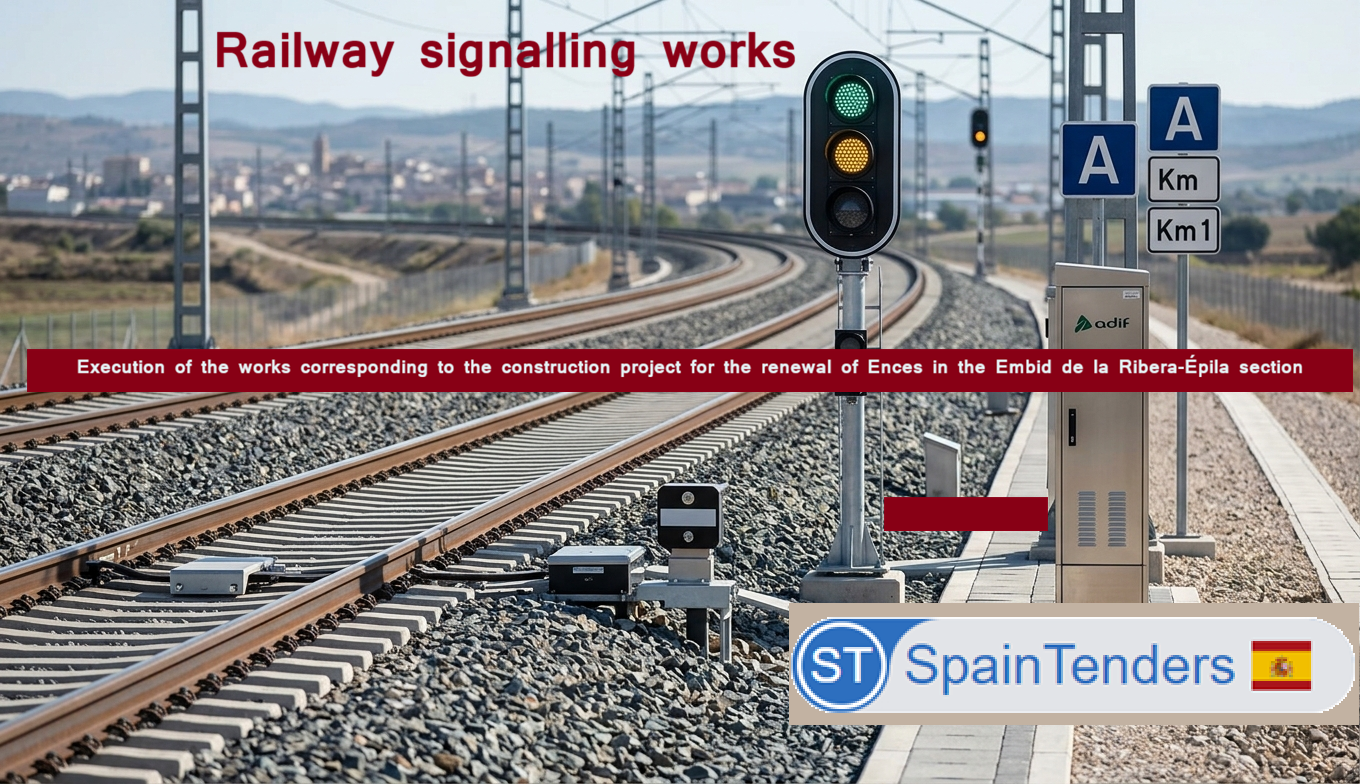
Standfirst:
Spain is continuing its long term modernisation of the national railway network with a €33.88 million contract to renew electronic signalling systems on the Embid de la Ribera Épila section in Aragón. Awarded by ADIF to a consortium led by Siemens Rail Automation and Sistemas y Montajes Industriales, the project will replace ageing signalling infrastructure with modern electronic interlocking technology designed to improve operational reliability, safety and future network capacity.
Railway infrastructure is often judged by the speed of trains or the condition of the tracks. Yet behind every safe and punctual journey lies another system that passengers rarely notice, the signalling network that continuously controls train movements, authorises routes and prevents conflicting traffic.
Across Europe, governments are investing heavily in modern signalling technologies as part of wider programmes to improve railway reliability, increase network capacity and prepare transport corridors for future digital operations. Spain has been steadily replacing older signalling installations with electronic interlocking systems capable of supporting a safer and more efficient railway.
That strategy has now advanced with ADIF's decision to award a contract for renewing the electronic signalling infrastructure on the Embid de la Ribera Épila section in Aragón. The project forms part of Spain's broader effort to modernise critical railway assets while strengthening one of the country's important regional rail corridors.
Why This Contract Matters
Railway signalling is the invisible intelligence behind every rail network. While tracks provide the physical route for trains, signalling systems determine when trains can move, which route they may follow and how conflicts between different services are safely managed.
Many European railway networks continue to operate with signalling equipment installed decades ago. Although these systems remain functional, ageing infrastructure increases maintenance requirements and limits the ability to introduce modern traffic management technologies.
By replacing existing electronic interlocking installations on the Embid de la Ribera–Épila section, ADIF aims to improve operational resilience while supporting higher levels of railway safety. The investment also prepares the corridor for future digital railway developments that will require increasingly sophisticated signalling and control systems.
For suppliers, the procurement reflects sustained public investment in railway modernisation, a market expected to generate significant procurement opportunities across signalling, communications, automation and rail engineering throughout Europe over the coming years.
Contract Timeline
- Procurement Procedure: Open Procedure
- Tenders Received: 5
- Contract Awarded: 14 July 2026
- TED Contract Award Notice Published: 17 July 2026
- Project Duration: 30 Months
Contract Overview
The procurement was organised by Administrador de Infraestructuras Ferroviarias (ADIF), Spain's national railway infrastructure manager responsible for developing, maintaining and operating one of Europe's largest rail networks.
The contract covers the execution of construction works associated with the renewal of electronic interlocking systems on the railway section between Embid de la Ribera and Épila, located in Aragón's Zaragoza province.
Following an open procurement procedure attracting five competitive tenders, ADIF selected the consortium UTE SIEMENS - SISTEM EMBID–ÉPILA, formed by Siemens Rail Automation S.A. and Sistemas y Montajes Industriales, S.A., as the successful contractor.
The winning consortium submitted a contract value of €33.88 million, below the estimated procurement value of approximately €38.55 million. The project will be delivered over a planned execution period of 30 months and represents another step in Spain's continuing investment in modern railway signalling infrastructure.
Key Contract Details
| Category | Details |
|---|---|
| Contracting Authority | Administrador de Infraestructuras Ferroviarias (ADIF) |
| Country | Spain |
| Region | Aragón (Zaragoza) |
| Contract Type | Works |
| Project | Renewal of Electronic Railway Signalling (Interlocking) Systems |
| Railway Section | Embid de la Ribera - Épila |
| Procurement Procedure | Open Procedure |
| Main CPV Code | 45234115 - Railway Signalling Works |
| Estimated Contract Value | €38,550,393.89 (Excluding VAT) |
| Winning Contract Value | €33,883,227.45 (Excluding VAT) |
| Project Duration | 30 Months |
| Winning Consortium | UTE SIEMENS - SISTEM EMBID–ÉPILA |
| Consortium Members | Siemens Rail Automation S.A. and Sistemas y Montajes Industriales, S.A. |
| Total Bids Received | 5 |
| Award Criteria | Quality (49%) • Price (51%) |
| Framework Agreement | No |
| Dynamic Purchasing System | No |
| EU Funding | No |
| Government Procurement Agreement (GPA) | Yes |
| TED Notice ID | 495007-2026 |
Project Scope
The contract covers the execution of works required to renew the electronic interlocking systems (Enclavamientos Electrónicos) along the Embid de la Ribera–Épila railway section in Aragón. Electronic interlocking is one of the most critical components of railway signalling, ensuring that train routes are established safely while preventing conflicting movements that could compromise network operations.
The project involves replacing ageing signalling equipment with modern electronic technology capable of delivering higher reliability, improved operational safety and greater compatibility with future railway digitalisation initiatives. Although the TED notice focuses on signalling renewal, such projects typically involve integrating trackside equipment, signalling hardware, control systems, communication interfaces, power supply upgrades, testing and commissioning activities.
The works will be carried out over a planned implementation period of 30 months. During this time, the consortium will coordinate closely with ADIF to minimise disruption to railway operations while modernising one of Aragón's important rail sections.
Once completed, the upgraded signalling infrastructure is expected to enhance operational resilience, reduce maintenance requirements and provide a stronger technological foundation for future improvements to Spain's railway network.
About the Contracting Authority
Administrador de Infraestructuras Ferroviarias (ADIF)
Administrador de Infraestructuras Ferroviarias (ADIF) is Spain's national railway infrastructure manager responsible for the construction, maintenance, operation and development of the country's conventional and high speed railway networks. Operating under Spain's Ministry of Transport, ADIF manages thousands of kilometres of railway infrastructure connecting major cities, industrial centres and international transport corridors.
Beyond track infrastructure, ADIF oversees signalling systems, electrification, telecommunications, stations, railway safety systems and digital railway technologies. As one of Europe's largest public railway infrastructure organisations, ADIF regularly launches high value procurement programmes supporting railway modernisation throughout Spain.
The organisation has been investing heavily in digital signalling, capacity improvements and infrastructure renewal to increase railway efficiency while supporting Spain's long term sustainable mobility strategy.
About the Organisations Involved
UTE SIEMENS - SISTEM EMBID–ÉPILA (Winning Consortium)
The contract was awarded to UTE SIEMENS - SISTEM EMBID–ÉPILA, a temporary joint venture established specifically for delivering this railway signalling project. The consortium combines the international signalling expertise of Siemens Rail Automation with the installation and engineering capabilities of Sistemas y Montajes Industriales.
Together, the consortium offers complementary strengths covering signalling technology, railway engineering, installation, commissioning and project execution. This combination positioned the joint venture to deliver a technically complex infrastructure project requiring both advanced railway technology and large scale field implementation.
Siemens Rail Automation S.A.
Siemens Rail Automation S.A. is one of Europe's leading railway signalling and mobility technology providers. The company develops advanced signalling systems, electronic interlocking technologies, train control solutions, traffic management platforms and digital railway infrastructure for rail operators around the world.
Its technologies support safer train operations, higher network capacity and improved operational efficiency across conventional and high speed railway systems. Siemens has participated in numerous railway modernisation programmes throughout Europe, making it a recognised supplier in complex signalling infrastructure projects.
Sistemas y Montajes Industriales, S.A.
Sistemas y Montajes Industriales, S.A. contributes specialised engineering, industrial installation and railway infrastructure expertise to the consortium. The company's experience in delivering complex infrastructure works complements Siemens' signalling technology capabilities, enabling the partnership to manage both technical integration and on site project execution.
Its role is expected to include installation, construction coordination, infrastructure integration and implementation support throughout the 30 month delivery period.
Tribunal Administrativo Central de Recursos Contractuales
The Tribunal Administrativo Central de Recursos Contractuales serves as the independent review authority for the procurement. The tribunal handles procurement related appeals and ensures that Spanish public procurement procedures comply with applicable national legislation and European Union procurement rules.
Procurement Analysis
ADIF selected an open procedure, enabling qualified railway infrastructure contractors to compete openly for the project. The procurement attracted five competitive tenders, demonstrating healthy market interest despite the specialised technical nature of railway signalling works.
The contract was evaluated using a balanced assessment model that allocated 49% of the total score to technical quality and 51% to price. This weighting reflects ADIF's procurement philosophy of selecting economically advantageous solutions while ensuring that technical capability remains a decisive factor for safety critical railway infrastructure.
The winning consortium secured the contract with a value of €33.88 million, representing a competitive outcome compared with the estimated procurement value of €38.55 million. The difference demonstrates effective market competition while allowing ADIF to maintain its technical requirements.
The procurement was not established as a framework agreement and does not use a Dynamic Purchasing System, indicating that this is a standalone infrastructure project with clearly defined scope, budget and implementation schedule.
Another notable aspect is that the project is not financed through European Union funds. Instead, the investment reflects Spain's own commitment to modernising national railway infrastructure, reinforcing continued public investment in transport resilience and operational efficiency.
Additional Procurement Facts
- Procurement Directive: Directive 2014/24/EU.
- National Procurement Law: Spain's Public Sector Contracts Law (Ley 9/2017).
- Contract Type: Works.
- Main CPV Code: 45234115 - Railway Signalling Works.
- Procurement Procedure: Open Procedure.
- Estimated Contract Value: €38,550,393.89 (excluding VAT).
- Awarded Contract Value: €33,883,227.45 (excluding VAT).
- Project Duration: 30 Months.
- Framework Agreement: No.
- Dynamic Purchasing System: Not Used.
- Award Criteria:
- Technical Quality - 49%
- Price - 51%
- Total Tenders Received: 5.
- Electronic Tenders Received: 5.
- SME Participation: 1 bid submitted by a micro, small or medium sized enterprise.
- Tenders from Other EEA Countries: None.
- Tenders from Outside the EEA: None.
- Government Procurement Agreement (GPA): Covered.
- EU Funding: No European Union funding.
- Subcontracting: Not indicated by the winning consortium.
- Contract Signed: 14 July 2026.
- Review Authority: Tribunal Administrativo Central de Recursos Contractuales.
Market & Industry Perspective
Europe is entering a new phase of railway modernisation where investment is increasingly directed toward signalling, automation and digital traffic management rather than simply expanding rail infrastructure. As passenger demand grows and governments pursue greener transport policies, reliable signalling systems have become essential for increasing railway capacity without constructing entirely new rail corridors.
Spain has been one of Europe's most active investors in railway infrastructure, particularly through ADIF's programmes covering high speed rail, conventional rail modernisation, electrification and signalling renewal. Modern electronic interlocking systems enable rail operators to improve network availability, reduce operational risks and support future deployment of advanced train control technologies such as the European Rail Traffic Management System (ERTMS).
The award to a consortium led by Siemens Rail Automation also reflects the increasing complexity of railway infrastructure projects. Public authorities are increasingly favouring partnerships that combine technology providers with engineering and installation specialists capable of delivering complete end to end railway solutions.
Demand for signalling upgrades is expected to remain strong across Europe as governments replace ageing electromechanical and early generation electronic systems with intelligent, software driven railway control platforms. This trend creates sustained procurement opportunities for signalling manufacturers, telecommunications providers, systems integrators and specialist railway engineering companies.
Economic Significance
Although valued at approximately €33.88 million, the significance of this project extends well beyond its contract value. Railway signalling infrastructure represents one of the most safety critical components of any national transport network, directly influencing operational efficiency, service reliability and passenger confidence.
Investment in signalling renewal typically generates long term economic benefits by reducing maintenance costs, improving train punctuality and increasing network capacity. These improvements allow rail operators to accommodate additional passenger and freight services without major expansion of physical railway infrastructure.
The project will also generate employment across railway engineering, electrical installation, systems integration, testing, commissioning and maintenance activities throughout the implementation period. Indirect economic benefits are expected to extend to equipment manufacturers, technology suppliers and specialist subcontractors supporting railway infrastructure projects.
Future Procurement Opportunities
Spain's railway modernisation strategy is expected to generate continued procurement activity across signalling systems, telecommunications, electrification, digital control centres and infrastructure renewal. Similar projects are likely to emerge as ADIF continues upgrading conventional rail corridors alongside its extensive high speed railway network.
Companies specialising in railway signalling, ETCS and ERTMS technologies, communications systems, fibre optic infrastructure, power supply systems, automation software, cybersecurity and intelligent transport solutions should closely monitor upcoming ADIF procurement programmes.
Growing emphasis on digital railway operations is also expected to create opportunities in predictive maintenance, remote monitoring, artificial intelligence for traffic management and integrated railway asset management platforms.
Opportunities for Suppliers
Although this contract has been awarded, the wider railway modernisation programme creates opportunities across multiple sectors.
- Railway signalling technology providers.
- Electronic interlocking system manufacturers.
- ERTMS and ETCS solution providers.
- Rail telecommunications companies.
- Railway electrification specialists.
- Civil engineering contractors.
- Testing and commissioning specialists.
- Industrial automation providers.
- Cybersecurity companies supporting rail infrastructure.
- Predictive maintenance software developers.
- Digital asset management solution providers.
- Railway systems integration consultants.
Future ADIF procurements may also generate subcontracting opportunities in cable installation, signalling equipment installation, software integration, inspection services and infrastructure maintenance.
What Businesses Should Watch
- Upcoming ADIF signalling modernisation projects.
- Spain's future ERTMS deployment programmes.
- Rail corridor digitalisation initiatives.
- Conventional railway infrastructure renewal projects.
- High speed rail expansion programmes.
- Railway communications and fibre network procurements.
- Smart railway traffic management projects.
- Long term railway maintenance contracts.
- Public private partnerships supporting transport infrastructure.
SpainTenders.com Procurement Intelligence
This contract highlights a broader shift taking place across European railway procurement. Governments are no longer focusing solely on expanding rail networks, they are investing heavily in making existing infrastructure smarter, safer and more efficient through digital signalling technologies.
Electronic interlocking systems serve as the operational brain of modern railways. Upgrading these systems enables infrastructure managers to improve network reliability, reduce service disruptions and prepare rail corridors for future automation and digital train control.
The procurement also demonstrates ADIF's continued commitment to competitive public procurement. Five qualified bids were received, allowing the authority to secure a technically capable solution below its original estimated budget while maintaining rigorous quality standards.
For suppliers, the award reinforces the importance of multidisciplinary capabilities. Success in railway procurement increasingly depends on combining advanced signalling technology, engineering expertise, installation capability and long term operational support into integrated delivery models.
As European governments continue prioritising sustainable transport, digital mobility and resilient infrastructure, railway signalling projects are expected to remain one of the fastest growing segments within public infrastructure procurement over the coming decade.
Supplier Takeaways
- Spain continues to prioritise investment in railway signalling as part of its long term rail infrastructure modernisation strategy.
- Public buyers increasingly favour suppliers capable of delivering integrated railway solutions that combine signalling technology, engineering expertise, installation and commissioning.
- Large scale railway contracts remain highly competitive, making technical capability and proven project experience critical differentiators alongside commercial pricing.
- Railway digitalisation is creating new opportunities for providers of automation software, communications systems, predictive maintenance platforms and intelligent transport technologies.
- Companies with expertise in ERTMS, ETCS, electronic interlocking systems, cybersecurity and digital railway operations should closely monitor future ADIF procurement programmes.
- Consortium based bidding continues to be an effective strategy for complex railway infrastructure projects that require multidisciplinary engineering capabilities.
- Spain's continued investment in railway resilience is expected to generate follow on procurement opportunities across signalling, electrification, telecommunications and long term maintenance services.
Key Takeaways
- ADIF has awarded a €33.88 million railway signalling contract for the Embid de la Ribera–Épila section in Aragón.
- The project will renew electronic interlocking systems to improve railway safety, operational reliability and future network capacity.
- The contract was awarded to the consortium UTE SIEMENS - SISTEM EMBID–ÉPILA, comprising Siemens Rail Automation S.A. and Sistemas y Montajes Industriales, S.A..
- The procurement followed an Open Procedure under Directive 2014/24/EU and Spain's Public Sector Contracts Law.
- Five competitive tenders were received, demonstrating continued market interest in specialised railway signalling projects.
- The contract will be delivered over a 30 month implementation period.
- Technical quality accounted for 49% of the evaluation, while price represented 51%, balancing engineering capability with value for money.
- The investment forms part of Spain's broader railway modernisation programme aimed at creating a safer, more reliable and digitally enabled rail network.
Conclusion
Railway signalling rarely attracts public attention, yet it remains one of the most critical technologies underpinning safe and efficient rail transport. By investing in the renewal of electronic interlocking systems on the Embid de la Ribera–Épila corridor, ADIF is strengthening infrastructure that will support railway operations for decades to come.
The award to the UTE SIEMENS - SISTEM EMBID–ÉPILA consortium demonstrates the growing importance of partnerships that combine advanced signalling technology with large scale engineering and installation expertise. Modern railway projects increasingly require integrated delivery models capable of managing both sophisticated digital systems and complex field execution.
Beyond the immediate infrastructure improvements, the project reflects Spain's broader commitment to developing a smarter and more resilient railway network. As governments continue investing in sustainable transport, signalling modernisation will remain central to improving network performance without the need for extensive new rail construction.
For businesses operating across the railway supply chain, this contract reinforces a clear market trend. Future opportunities will increasingly favour suppliers capable of delivering intelligent signalling systems, digital control technologies and integrated engineering solutions that support the next generation of European rail transport.
Frequently Asked Questions
What is the purpose of this contract?
The project renews the electronic railway signalling (interlocking) systems on the Embid de la Ribera–Épila section in Aragón, improving railway safety, operational reliability and network efficiency.
Who awarded the contract?
The contract was awarded by Administrador de Infraestructuras Ferroviarias (ADIF), Spain's national railway infrastructure manager.
Who won the contract?
The winning consortium is UTE SIEMENS - SISTEM EMBID–ÉPILA, formed by Siemens Rail Automation S.A. and Sistemas y Montajes Industriales, S.A..
What is the contract value?
The awarded contract is valued at €33,883,227.45 (excluding VAT).
How long will the project take?
The planned implementation period is 30 months.
How many companies submitted bids?
ADIF received five competitive tenders through the open procurement procedure.
Is the project funded by the European Union?
No. The TED notice confirms that the procurement is not financed with European Union funds.
Why is signalling modernisation important?
Modern signalling systems improve railway safety, increase operational efficiency, reduce maintenance costs and prepare rail corridors for future digital traffic management technologies such as ERTMS.
Will similar procurement opportunities be available?
Yes. ADIF continues to invest heavily in railway infrastructure modernisation and additional opportunities are expected across signalling, telecommunications, electrification, intelligent transport systems and long term railway maintenance.
Source: Tenders Electronic Daily (TED), Contract Award Notice 495007-2026, Official Journal of the European Union, published on 17 July 2026.
This article is based on information published in the official TED (Tenders Electronic Daily) Contract Award Notice. Spaintenders.com has supplemented the official procurement data with independent editorial analysis, market context and procurement intelligence to help businesses understand the strategic significance of the award and identify future public procurement opportunities.

Fresh and verified Tenders from Spain. Find, search and filter Tenders/Call for bids/RFIs/RFPs/RFQs/Auctions published by the government, public sector undertakings (PSUs) and private entities.
- 1,000+ Tenders
- Verified Tenders Only
- New Tenders Every Day
- Tenders Result Data
- Archive & Historical Tenders Access
- Consultants for RFI/RFP/RFQ
- Tender Notifications & Alerts
- Search, Sort, and Filter Tenders
- Bidding Assistance & Consulting
- Customer Support
- Publish your Tenders
- Export data to Excel
- API for Tender Data
- Tender Documents

Fill out the form below and you will receive a call from us within 24 hours.
Get FREE SAMPLE TENDERS from Spain in your email inbox.
Copyright © 2014-2026 SpainTenders.com. All Rights Reserved.